
How to add an AI chatbot to your website and WhatsApp (the right way)
Most businesses end up with two separate bots that give different answers. Build one assistant with one set of knowledge, then connect it to both channels.
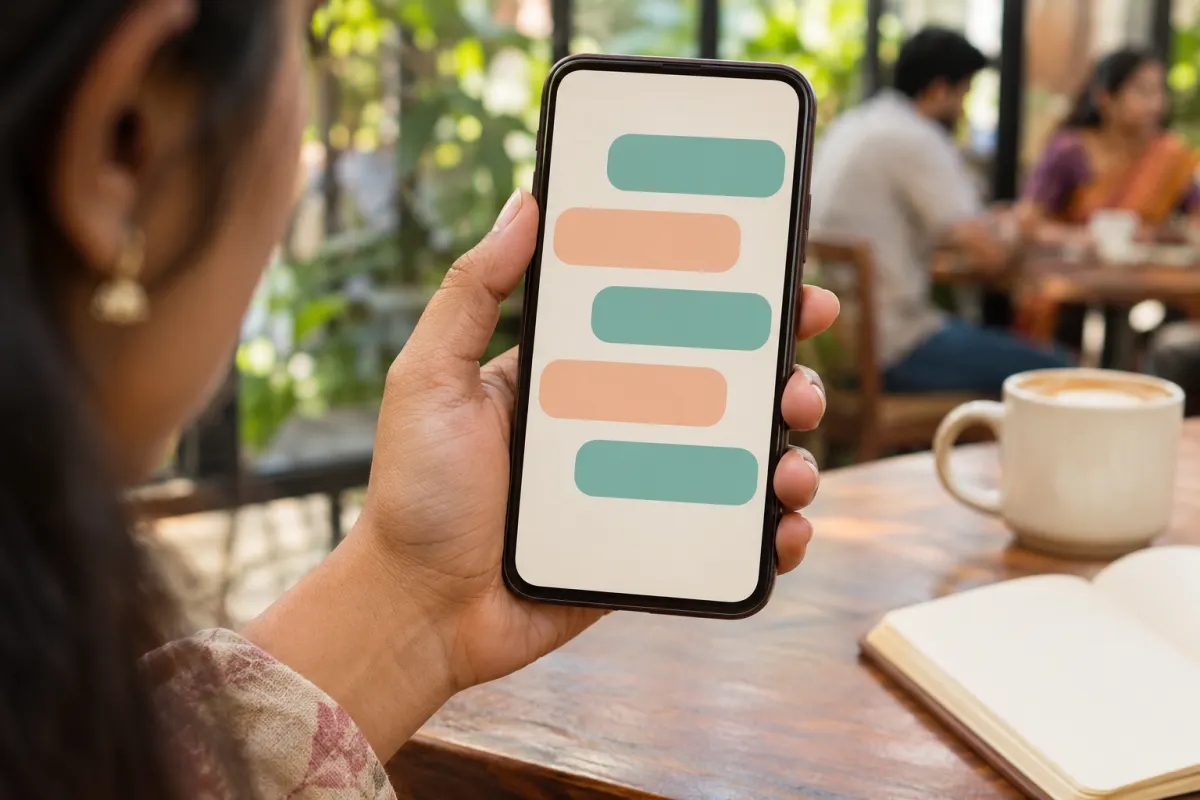
Here's a pattern we see often. A business adds a chatbot plugin to its website. Six months later it adds a separate WhatsApp bot from a different provider. Now there are two bots, trained on two different sets of information, giving customers two different answers about the same price.
The better way is simple to describe: build one assistant with one source of knowledge, then connect it to every channel. Here's how that works, and what's specific to WhatsApp.
The parts of a good AI chatbot
- Knowledge: your FAQs, price lists, product catalogue, policies and timings, kept in one place and updated when they change.
- The AI model: a model from OpenAI, Anthropic, Google or an open-source model, which reads the customer's question and the relevant knowledge and writes the reply.
- Instructions: who the assistant is, how it speaks, what it may and may not say, and when to hand over. We cover this in how to give your AI assistant a persona.
- Channels: the website chat widget, WhatsApp, and possibly Instagram.
- Handover: a clean way to pass the conversation to a person.
- Records: conversations and leads saved to your CRM or a sheet, so nothing is lost.
When the assistant answers from your own documents rather than general knowledge, it uses a technique called RAG. Our plain-English guide to building an AI assistant on your company data explains it.
Three ways to build it
1. A no-code chatbot platform
Fastest to start. You upload your FAQs, connect your website and WhatsApp through the platform, and pay a monthly fee. Good for simple question-and-answer use. The limits show up when you need it to follow complex rules, connect to your own software, or keep your data in a specific place.
2. A platform plus some custom work
A middle path: use an established WhatsApp provider and an AI provider's API, and have a developer build the connections to your CRM, booking system or database. This is where most small and mid-sized businesses end up.
3. Fully custom
Your own chat widget, your own backend, your choice of AI model (including self-hosted open-source models for sensitive data), deep integration with your systems. More work, more control.
What's different about WhatsApp
WhatsApp is where Indian customers actually want to talk, but it has rules of its own.
- You need the WhatsApp Business Platform (the API), connected either directly through Meta or through a business solution provider. The free WhatsApp Business app alone isn't built for AI automation at scale.
- Your business gets verified through Meta's business tools, and you register a phone number for the assistant. Ask your provider how your current number can be used, since the options for numbers already on the WhatsApp Business app have changed over time.
- Customers start, you reply freely. When a customer messages you, a customer service window opens and the assistant can reply normally within it.
- Business-started messages need approved templates. Reminders, order updates and offers sent outside that window must use templates approved by Meta, and are charged per message by category. See what AI automation costs in India for how that adds up.
- Opt-in matters. Only message people who agreed to hear from you. Spammy messaging gets numbers reported and restricted.
Not every WhatsApp message needs AI. Order updates, payment reminders and appointment reminders are fixed templates sent by rules. Our guide to WhatsApp Business API automation covers those, and our business automation page lists what we build.
The website widget
- Placement: bottom corner, not covering your content or "Book now" button on phones.
- Speed: load the chat widget after the page has loaded, so it doesn't slow your site down for visitors and for Google.
- Privacy: show a short note that answers are generated by AI and link to your privacy policy, especially if the widget asks for a phone number or email.
- Hand-off to WhatsApp: many Indian customers would rather continue on WhatsApp. Offer the option.
Handover to a person: design it first
The most important feature of a business chatbot is knowing when to stop. Decide in advance when the assistant should hand over:
- The customer asks for a person, or is clearly upset.
- Payment problems, refunds, complaints and anything medical or legal.
- Questions the assistant can't answer from your knowledge.
- High-value leads that deserve a human call quickly.
Outside office hours, the assistant should say honestly when a person will reply, take the details, and make sure someone actually follows up.
Test it like a customer would
Before launch, collect 50 to 100 real questions from your WhatsApp history, in the way customers actually write them: short, misspelt, in Hinglish, sometimes rude. Run them all through the assistant and read every answer. Fix the knowledge and instructions where it's wrong, and make sure it says "I'm not sure, let me connect you to our team" instead of guessing.
Measure after launch
- How many conversations it resolves without a person.
- How many it hands over, and why.
- How many leads or bookings it captures.
- The answers customers rated as unhelpful, or that staff had to correct.
Read a sample of conversations every week for the first month. It's the fastest way to make the assistant better.
Common mistakes
- The bot pretends to be a human. Customers find out, and trust drops.
- No easy way to reach a person.
- Old prices or offers left in the knowledge base.
- Collecting phone numbers without consent or a privacy note.
- Sending promotional templates to people who never opted in.
If you'd like this built for you, website and WhatsApp with one brain, see our AI chatbot services. And before you start, our guide on AI chatbot security and guardrails covers how to keep customer data safe.
FAQs
The free WhatsApp Business app has quick replies, greeting and away messages, which are fine for a small shop. An AI assistant that replies automatically at scale and connects to your systems needs the WhatsApp Business Platform (the API), either directly through Meta or through a business solution provider.
Yes. Meta offers messaging APIs for Instagram direct messages as well, so one assistant with one knowledge base can answer on your website, WhatsApp and Instagram, as long as each channel is connected and tested.
A basic FAQ assistant usually takes two to three weeks, including preparing your knowledge, testing and launch. Assistants that book appointments or update a CRM take longer because each integration has to be built and tested.
Current AI models handle Hindi, Hinglish and major Indian languages well. Test with real customer messages in each language before launch, and tell the assistant to reply in the language the customer used.