
Voice AI agents in India: use cases, Hindi support, costs and rules
Voice AI agents now answer and make phone calls in Hindi, Hinglish and English. Where they help, what they cost per minute in India, and the calling rules you must follow.
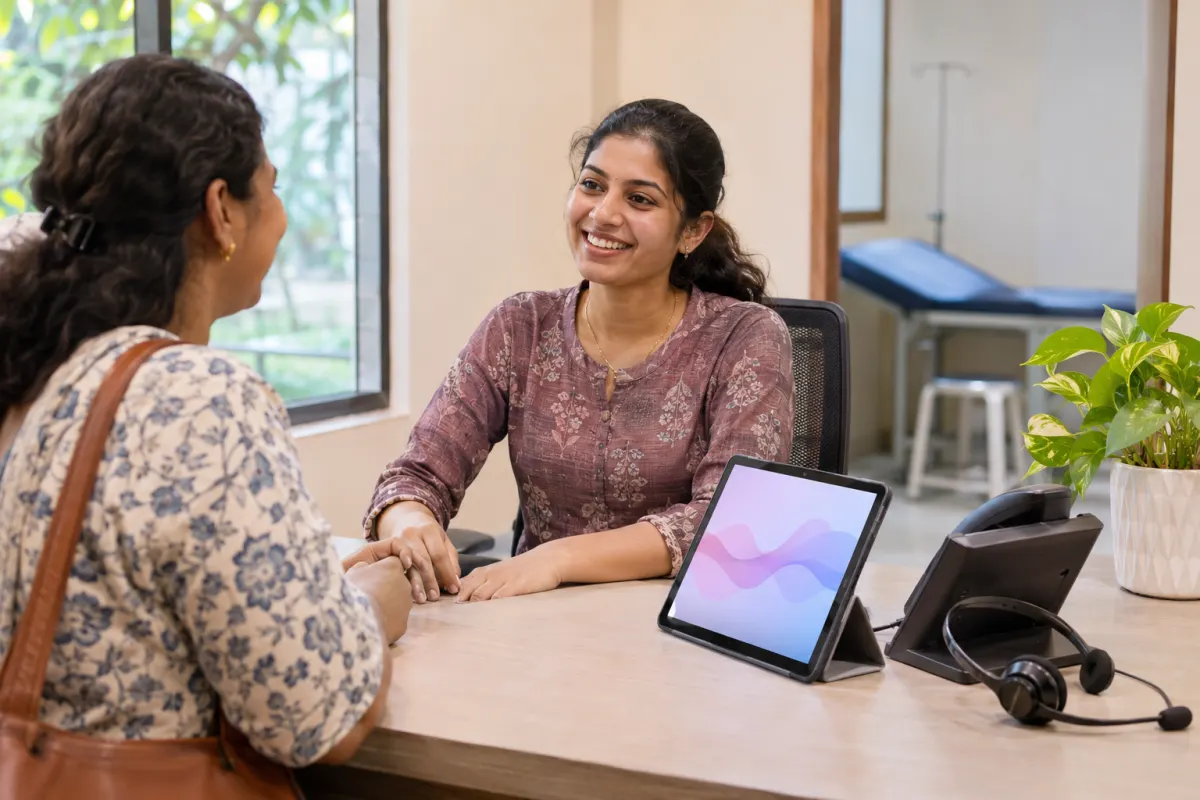
A voice AI agent is software that answers or makes phone calls and talks like a person: it listens, understands, replies in a natural voice and can book an appointment, take an order or pass the call to your team. In 2026, Indian platforms handle Hindi, Hinglish and several regional languages, and charge by the minute.
For businesses that live on the phone (clinics, real estate, education, finance, local services), this is one of the most useful kinds of AI. It is also easy to get wrong. Here is how it works, where it helps, what it costs and the rules to follow.
How a voice AI agent works
- The call connects through a phone number your provider routes to the agent.
- Speech-to-text turns what the caller says into text, in real time.
- A language model decides what to say or do next, following your instructions and checking your systems (calendar, CRM, order status).
- Text-to-speech replies in a natural voice, in the caller's language.
- Handover: when the caller asks for a person, or the agent is unsure, the call transfers to your team with a summary.
- After the call: a transcript and summary land in your CRM, and any follow-up task is created.
All of this has to happen in well under a second per reply, or the conversation feels awkward. Latency is the first thing to test in any demo.
Where voice agents help
Incoming calls
- After-hours and overflow answering for clinics, salons and service businesses, so no caller hears an unanswered ring.
- Appointment booking and rescheduling straight into your calendar.
- Order and delivery status for distributors and online stores.
- First-level enquiries: fees, timings, locations, documents needed.
Outgoing calls
- Calling back new leads within minutes to confirm interest and book a meeting with your salesperson.
- Appointment and renewal reminders that also handle "can I move it to Friday?"
- Payment reminders with the exact amount due, passing disputes to a person.
- Feedback calls after a service visit.
Hindi, Hinglish and regional languages
Indian platforms advertise wide language support. MyOperator, for example, says its voice agent handles English, Hindi, Hinglish and nine more Indian languages. Advertised support is not the same as working well for your callers, though. Before choosing, test with real recordings: your customers' accents, the noise of a busy shop or a moving car, and the way they say amounts, dates, names and pincodes.
What voice AI costs in India
Most Indian platforms publish per-minute rates. As listed on their pricing pages in November 2026:
| Platform | Published rate | Note |
|---|---|---|
| Sarvam | ₹3 to ₹3.50 per minute | Depends on plan; excludes GST |
| CallMissed | ₹4 per minute | Standard plan; phone carriage billed separately |
| Ringg AI | ₹6 per connected minute | India pricing in rupees |
Headline rates rarely tell the whole story. Ask about phone numbers and telephony charges, minimum billing per call, setup and integration fees, call recording storage and GST. Rates change often, so confirm on the vendor's own page.
A rough illustration: 3,000 calls a month averaging 2 minutes at ₹5 a minute is about ₹30,000 a month in platform charges, before telephony and GST. Compare that with the cost of the calls going unanswered, or of the staff hours they take today.
The rules for business calls in India
An AI caller is still a caller, and TRAI's rules on commercial communication apply. In its July 2026 clarification, TRAI said promotional calls from any sector must come from 140-series numbers, where customers' DND preferences apply, while 1600-series numbers are reserved for service and transactional calls from regulated entities such as banks, insurers and government bodies, with a 1601 sub-series introduced for utilities and logistics. In practice:
- Use the right number series for the type of call, through a registered telecom provider.
- Get consent before promotional calls, and honour opt-outs.
- Say it is an automated assistant at the start, and offer a person.
- Treat recordings and transcripts as personal data under the Digital Personal Data Protection Act: tell callers, keep them secure, keep them only as long as needed.
Rules in this area change often. Check the current position with your telecom provider before launching outbound calls.
Buy a platform or build your own?
- A ready-made platform suits standard flows: answering FAQs, booking appointments, simple reminders. Fast to launch, priced per minute.
- A custom build makes sense when the agent has to read and update your own systems, such as a hospital management system, an ERP or a custom CRM, or follow an unusual process.
Many businesses start with a platform for one flow and add integrations later.
Questions to ask before you choose a vendor
- Which languages and accents have you tested, and can we hear real call recordings in Hindi or our regional language?
- What does one minute really cost once telephony, phone numbers, minimum billing per call and GST are added?
- How fast does it reply on a normal mobile call, not in a quiet office demo?
- How does handover to a person work, and does our team see a summary before picking up?
- Can it read and update our systems, such as the calendar, CRM or order database, and what does that integration cost?
- Where are recordings and transcripts stored, who can access them, and for how long are they kept?
- Which number series and telecom provider will outbound calls use?
A sensible pilot
- Start with inbound after-hours calls or appointment reminders: low risk, easy to measure.
- Write the script the way your best receptionist would handle the call.
- Run it for two weeks and listen to 50 recordings.
- Fix the misunderstandings, then measure: calls answered, bookings made, transfers to people.
- Only then add outbound calling.
Voice agents are one kind of AI agent. Our guide to AI agents for business covers the wider picture, and WhatsApp Business AI covers the chat side, which many customers prefer to a call. For budgeting the rest of an AI project, see what AI automation costs in India.
FAQs
Software that answers or makes phone calls and holds a natural conversation: it turns the caller's speech into text, decides what to say with a language model, replies in a human-sounding voice, and can book, update or hand over to a person.
Yes. Several Indian platforms support Hindi, Hinglish and multiple regional languages. Quality varies with accents, background noise and how numbers and names are spoken, so test with recordings of your own customers before you commit.
Published platform rates in India mostly fall between about ₹3 and ₹6 per minute in November 2026, for example ₹3 to ₹3.50 at Sarvam, ₹4 at CallMissed and ₹6 per connected minute at Ringg, usually before telephony charges, setup and GST.
Calls must follow TRAI's rules for commercial communication. Promotional calls must come from 140-series numbers and respect DND preferences, while 1600-series numbers are reserved for service and transactional calls from regulated sectors such as banking and insurance. Get consent, and check the current rules with your telecom provider.
Yes. Saying so at the start builds trust, avoids complaints and gives callers a clear way to ask for a person. Customers mind being misled far more than they mind talking to a well-built assistant.