
Custom website design vs templates: what should an Indian business choose?
A template gets you online fast and cheap. A custom design fits your brand and your sales process. What each really costs in India, how they differ for SEO and speed, and a quick test to choose.
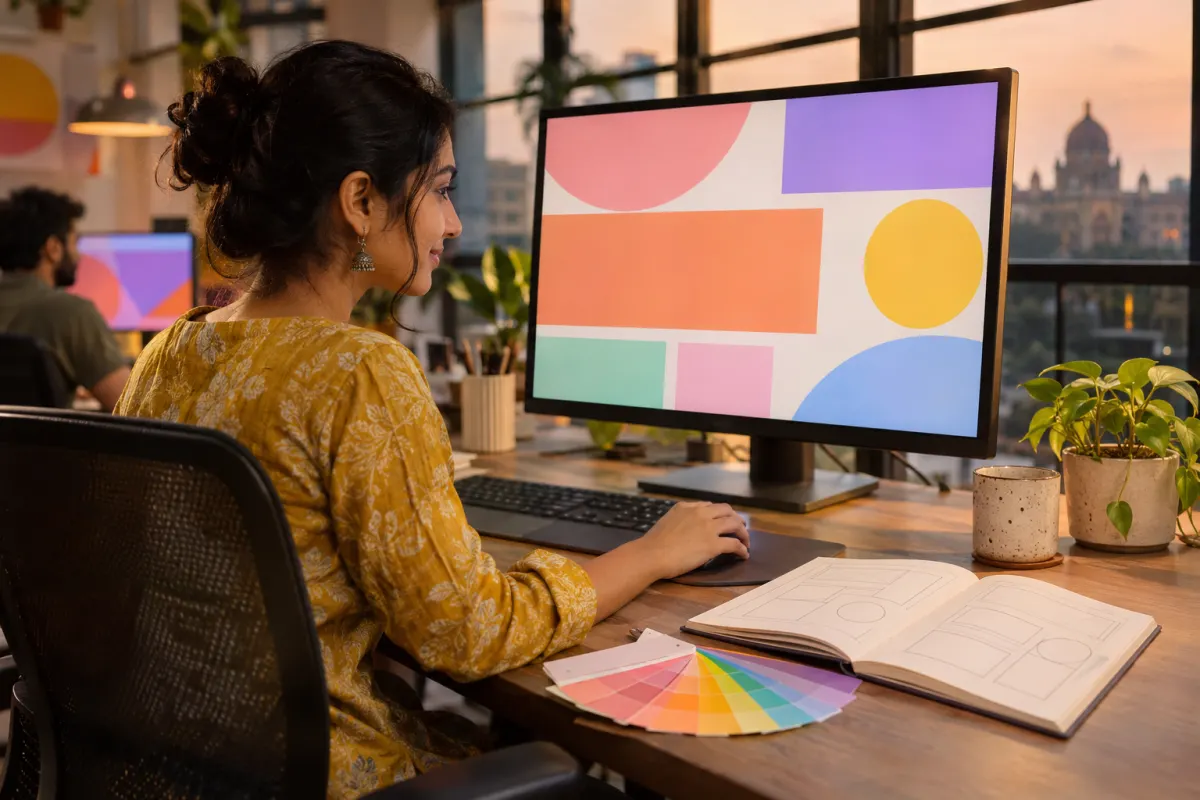
Choose a template if you need a professional website quickly on a tight budget and your business is easy to explain. Choose custom design when your brand, your sales process or your features don't fit a ready-made layout. Many businesses do best with a middle path: a well-chosen template, customised properly, with custom work only where it pays.
Here is how the options differ in cost, time, speed and SEO, and a quick test to decide.
The four options, in plain terms
- Template as is: a ready-made theme (WordPress, Shopify, Wix) with your logo, text and photos dropped in.
- Customised template: a good theme as the base, with colours, fonts, sections and page layouts adjusted to your brand.
- Custom design: layouts designed from scratch for your business, built on WordPress, Shopify or another platform.
- Custom design and custom code: designed and built from scratch on a framework such as Laravel or Next.js, usually because the site does more than show information: bookings, portals, calculators, integrations.
Side by side
| Template | Custom design | |
|---|---|---|
| Cost | Lower | Higher; depends on pages and features |
| Time to launch | Days to a few weeks | Several weeks to a few months |
| Looks unique | Others may use the same theme | Yes |
| Fits your sales process | Only if your process is standard | Designed around it |
| Speed | Good if the theme is light; heavy themes can be slow | Can be built lean from the start |
| Flexibility later | Limited by the theme | High |
| Maintenance | Theme and plugin updates | Depends on how it is built; needs a reliable developer |
What it costs in India
As a reference, these are the prices published on our website development page (other agencies price differently):
- Standard small-business website: ₹15,000 to ₹60,000.
- Custom builds and online stores: ₹80,000 to ₹5 lakh, depending on scope, integrations and features.
- Maintenance: from ₹3,000 a month for updates, backups, security patches and speed checks.
The price difference comes from design time, the number of unique page layouts, custom features and the testing they need. Our website cost guide breaks this down further.
Does custom design rank better on Google?
Not by itself. Google ranks pages on whether they answer the search well, how trustworthy the business looks and how the page performs for visitors, not on whether the design was custom-made. A light template with excellent content can outrank a beautiful custom site with thin content.
Where design does affect search is speed and structure. Some popular themes load sliders, animations and plugins you never use, which slows phones down. A custom build can be kept lean. Either way, check the speed on a real phone; our guide to website speed explains how.
A quick test: which one do you need?
A template is usually enough if most of these are true:
- Your business is easy to explain in a few pages.
- You need to be online within a month.
- Visitors mainly need information and a way to call or WhatsApp you.
- Your budget is under ₹60,000.
Custom design pays off when most of these are true:
- Your brand is a big part of why customers choose you (fashion, hospitality, premium products, design services).
- Your sales process has steps a template doesn't handle: quotes, bookings, configurators, dealer logins.
- The site has to connect to your CRM, ERP, billing or stock.
- You compete with well-funded brands on looks and experience.
The middle path most businesses should consider
Start with a light, well-supported template, customised to your brand: your colours, typography, real photos and page structure built around your services. Measure which pages bring enquiries. A year later, put custom design and development money into the pages and features that clearly earn it. This keeps the first launch fast and affordable, without locking you in.
What a custom design should include
- Page templates for each type of page (home, service, case study, contact), designed for both desktop and mobile.
- A simple design system: colours, fonts, buttons, forms and spacing rules, so new pages stay consistent later.
- Image direction: how photos should look, and which real photos to shoot.
- The details: how forms look with an error, empty states, and what happens on tap and hover.
- Editable source files handed over to you, not only the finished website.
If a quote for "custom design" covers only the home page, the rest of the site will usually be template pages wearing your colours. Ask which pages are designed from scratch and which are reused.
How to brief a designer
- Your goal: calls, WhatsApp enquiries, bookings or online sales.
- Three websites you like, and exactly what you like about each.
- Your customers: who they are and what they worry about before buying.
- The pages and features you need, in order of importance.
- Your budget range and launch date.
Switching later without losing search traffic
If you start on a template and move to a custom design later, keep the same page addresses wherever you can, and redirect any address that changes to its new page. Keep the titles, headings and content that already bring visitors, and carry your analytics and Search Console settings across. Done this way, a redesign keeps the rankings you have earned instead of starting again from zero.
Red flags
- Pirated ("nulled") premium themes, often loaded with malware and never updated.
- Page builders stacked on page builders, which make sites slow and hard to change.
- No mobile design shown before development starts.
- Accounts in the agency's name instead of yours.
Before you start, read our guide to the website development process so you know what each stage involves, and our landing page guide to make sure the design turns visitors into enquiries.
FAQs
A website whose layout and look are designed for your business from scratch, based on your brand, your customers and how you sell, instead of starting from a ready-made theme that thousands of other sites also use.
Not by itself. Google ranks pages on their content, usefulness and speed, not on whether the design is custom. A light, well-built template with good content can rank well. Heavy templates loaded with unused features can hurt speed, which does matter.
As a reference, our published prices are ₹15,000 to ₹60,000 for a standard small-business website, and ₹80,000 to ₹5 lakh for custom builds and online stores, depending on pages, features and integrations. Other agencies price differently.
Yes, and many businesses should. Launch on a good template, learn which pages bring enquiries, then invest in custom design where it pays. Keep your content, URLs and accounts so the move later is smooth.
Agree in writing that the design files, code and content belong to your company once paid for, and that the domain, hosting and admin accounts are in your company's name.